Abstract Floral Linework: A Designer’s Real-World Review
First Impressions: Airy, Intentional, and Surprisingly Versatile
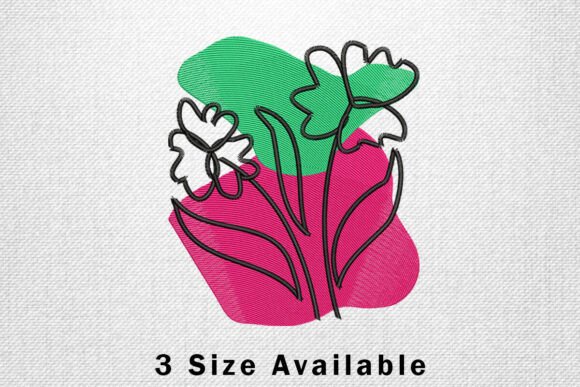
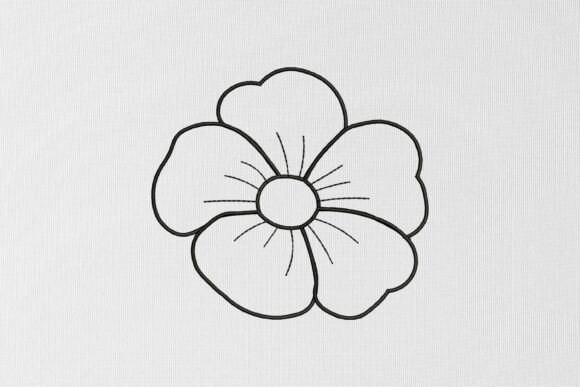
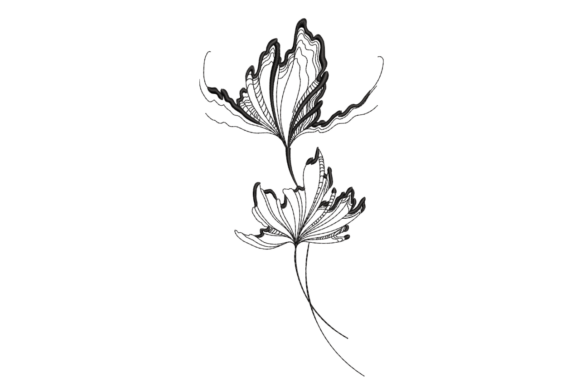
When I opened Abstract Floral Linework for the first time, I didn’t see a “flower” in the literal sense—I saw rhythm. Looped stems, asymmetrical petals drawn with confident line weight, and negative space that breathes. It’s not botanical realism; it’s floral suggestion—clean, modern, and quietly expressive. As an embroidery designer who’s stitched hundreds of motifs for clients and my own craft business, I immediately sensed its strength: it doesn’t shout. It invites closer looking. That makes it ideal for products where subtlety equals sophistication—think boutique tea towels, minimalist pillow covers, or personalized baby onesies where over-decoration feels overwhelming.
How It Actually Stitches: Clarity Over Complexity
I tested Abstract Floral Linework on three real project types: a medium-weight cotton tote bag (for a local café’s small-batch merchandise), a soft French terry sweatshirt (custom order for a yoga studio), and a linen-cotton blend kitchen towel (Etsy listing mockup). In every case, the design held its integrity without dense fill stitches or fragile satin borders. It’s clearly built as a machine embroidery design focused on running stitch and clean linework—not applique design or heavy fill stitch. That means lower stitch density, faster sew-out times, and less risk of puckering on lightweight or textured fabrics.
On the sweatshirt? Perfect. The lines stayed crisp, no thread nesting, and the open structure let the fabric’s drape shine through. On the linen towel? Even better—the natural slubs added organic texture *with* the design, not against it. And on the tote? It scaled beautifully at 4.2" wide—no detail loss, no jagged corners. No stabilizer drama either: medium tear-away worked cleanly across all three.
Where It Shines—and Where to Pause
Abstract Floral Linework excels in contexts where elegance meets wearability:
- Custom apparel: Especially crewnecks, relaxed tees, and structured caps—its line-based nature avoids bulk on curved surfaces.
- Baby embroidery: Gentle, non-cluttered, and easy to read at small sizes—ideal for onesies or burp cloths without visual noise.
- Holiday embroidery & wedding gifts: Looks equally at home on a monogrammed handkerchief or a linen napkin set—timeless, not trendy.
- Etsy seller assets: Works flawlessly in printable mockups and digital product previews—its contrast and shape translate well across screens and print.
But here’s where attention matters:
- Small hoop sizes: Below 3.5", fine details like tapered stem ends may soften—test before committing to tiny patches or cap fronts.
- Stretchy fabric: Use cutaway + topping on knits. Linework relies on precision—any shifting blurs intention.
- Dark fabric: Opt for high-contrast thread colors (ivory, pale sage, charcoal) rather than trying to force light pastel threads to read clearly.
- Frequent-wash items: While the stitch density is moderate, always check thread lock stability on the back—especially where lines converge.
What It Does for Your Craft Business—Beyond the Stitch
As someone who sells both finished handmade products and digital embroidery files, I judge designs by how they impact perception—not just production. Abstract Floral Linework elevates perceived value instantly. It reads as intentional, curated, and design-forward—not “cute” or “crafty” in a dated way. That matters when you’re pricing a $48 embroidered apron for a chef-owned kitchen shop or positioning your Etsy brand as elevated slow-craft.
Customers notice the difference. A client recently ordered matching sweatshirts for her small team—she chose Abstract Floral Linework over a more literal floral because “it felt like *us*: thoughtful, not fussy.” That’s the quiet power of this motif. It supports brand consistency without demanding rigid color palettes or rigid layouts. You can pair it with serif typography on a gift tag or let it stand alone on a folded blanket edge—and it reads as cohesive.
For Etsy sellers and small shop owners: this design converts. Its simplicity makes it easy to photograph well, scales cleanly across product variations, and appeals across age groups—teens love its minimalism; grandparents appreciate its calm clarity. And because it’s rooted in outline rather than dense fill, it’s forgiving in mockup lighting and doesn’t require expensive photo retouching to look polished.
Practical Designer Notes Before You Sew
Before adding Abstract Floral Linework to your next embroidery project—or listing it as part of your digital product shop—here’s what I do every time:
- Test on scrap fabric first—especially if using textured weaves, blends, or new stabilizer combos.
- Check thread color contrast on both light and dark backgrounds. A single thread shade can read completely differently depending on base fabric tone.
- Review stitch density visually in your embroidery software—not just the count. Look for tight clusters or long jumps that might snag.
- Confirm hoop size compatibility with your most-used machines. This design fits comfortably in a 5x7 hoop—but verify before scaling for a 4x4 setup.
- Inspect small details at 200% zoom: are stem tips sharp? Do intersecting lines maintain separation?
- Test black-and-white mockups to ensure legibility without color crutches.
- Use proper stabilizer—not just “whatever’s on hand.” Medium tear-away is reliable, but for stretch or sheer fabrics, layer with a light water-soluble topper.
- Verify licensing before selling finished items or bundling this digital embroidery file into your own design assets. If commercial use isn’t explicitly granted, don’t assume it’s included.
In short: Abstract Floral Linework isn’t just another embroidery file. It’s a thoughtful tool—one that works as hard for your brand as it does for your needle. Whether you're stitching a one-off personalized gift or building a repeatable product line for your craft business, it delivers clarity, calm, and quiet confidence. And in today’s saturated handmade market? That kind of intentionality doesn’t just stitch well—it sells.