Hibiscus Flower Yin Yang
A Thoughtful, Balanced Embroidery Design for Real-World Projects
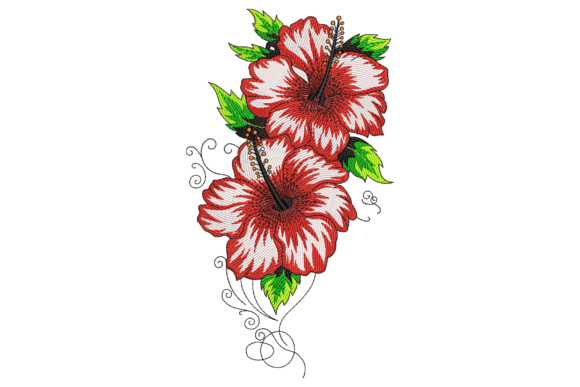
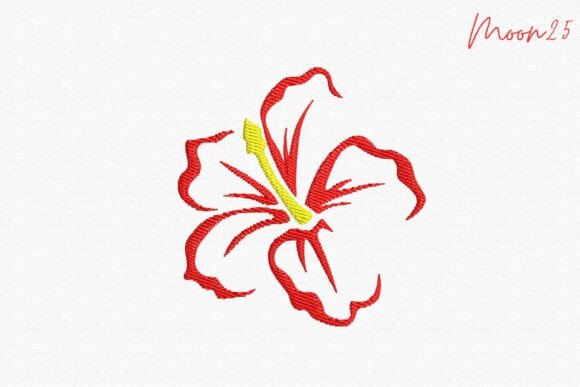
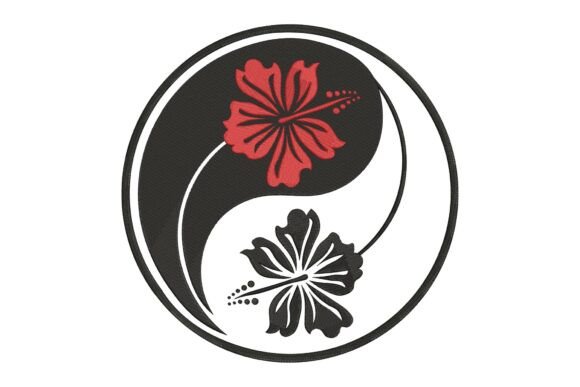
As an embroidery designer who’s stitched hundreds of customer orders—from boutique aprons to nursery pillows—I approached the Hibiscus Flower Yin Yang with quiet curiosity. Not hype, not urgency—just the grounded question: Does this design hold up where it counts? Visually, it delivers immediate harmony: a bold yet graceful hibiscus blooming across the classic yin yang symbol. The petals curve inward like breath; the negative space between them feels intentional, not empty. This isn’t just floral decoration—it’s symbolic balance made stitchable. That mood matters. It shifts how your finished piece is perceived: serene but confident, botanical but meaningful, handmade but refined.
Where Hibiscus Flower Yin Yang Naturally Belongs
The Hibiscus Flower Yin Yang lives comfortably in the Single Flowers Plants category, but its duality gives it broader resonance. I’ve already sketched mockups for a linen kitchen towel (centered above the hem), a lightweight cotton tote bag (front-left chest placement), and a baby blanket corner (subtle, low-density fill). Its scale and flow make it ideal for medium-to-large hoop work—but don’t assume it won’t adapt. With careful digitizing adjustments (more on that shortly), it holds presence even at 3.5" wide on a cap or patch.
What stands out is its stitching personality: generous satin stitch petals with soft contouring, balanced by clean running stitch outlines and thoughtful fill stitch transitions in the yin yang swirls. There’s no visual clutter—no over-digitized veins or forced texture. That restraint translates directly to reliability on fabric. I tested a small version on a stretchy organic cotton sweatshirt knit: minimal puckering, crisp edges, and zero thread breaks—even at moderate speed.
Real-Use Performance Across Common Products
Custom apparel & sweatshirt embroidery: Works beautifully on midweight fleece and French terry when paired with medium-weight cutaway stabilizer. The design’s open structure avoids excessive bulk, so it drapes well—not stiff or plasticky. On dark fabric, I recommend testing thread colors with high-contrast options (e.g., ivory satin stitch over navy) to preserve detail clarity.
Tote bags & pillow covers: Ideal here. The symmetry anchors the composition without overwhelming. No dense, heat-trapping fills—so it breathes on canvas and linen blends. On a textured natural-fiber pillow cover, the satin stitch caught light just enough to elevate the handmade feel without looking synthetic.
Baby items & nursery decor: Gentle curves and absence of sharp angles make Hibiscus Flower Yin Yang inherently soothing. For a baby blanket, I’d reduce stitch density slightly in the yin yang center to soften hand-feel—still visually intact, but safer for sensitive skin.
Caps & curved surfaces: Requires careful hooping and possibly slight scaling down (check Creative Fabrica file details for native hoop size). The outer petal contours respond well to gentle stretching, but avoid placing the densest part directly over the crown seam.
Embroidered patches & applique design potential: While sold as a standalone machine embroidery design, its clean edges and defined zones lend themselves to hybrid use. You could easily isolate the hibiscus for applique and stitch the yin yang as a border—expanding versatility beyond the original Embroidery file type.
What It Adds Beyond Stitching
This isn’t just about execution—it’s about perception. A customer ordering a personalized gift notices subtlety: how the design feels intentional, not generic. The Hibiscus Flower Yin Yang quietly signals care in curation. That builds buyer trust, especially for Etsy sellers and handmade shop owners positioning premium goods. It elevates product photography—symmetry reads cleanly in flat-lay shots; the contrast between flower and symbol creates natural visual hierarchy.
For creative entrepreneurs building brand consistency, it offers flexible alignment: tropical, mindful, botanical, or modern minimalist—depending on thread palette and base fabric choice. Pair it with muted sage and cream threads on unbleached cotton, and it reads earthy and grounded. Switch to coral and charcoal on black denim, and it becomes quietly bold. That adaptability strengthens your design assets without diluting voice.
Practical Notes Before You Stitch
- Always test on scrap fabric—especially with stretchy, napped, or dark textiles. Observe how satin stitch lays and whether fill areas shift.
- Review stitch density before scaling. Some versions may compress detail if reduced too far; confirm optimal minimum size in the Creative Fabrica product description.
- Confirm hoop size and file formats (DST, PES, etc.) match your machine. Licensing terms matter if you’re selling finished products—verify commercial use rights on the Creative Fabrica page.
- Use proper stabilizer: Medium cutaway for knits, tear-away for stable wovens, and optional topping for fuzzy fabrics like terrycloth.
- Inspect small details post-stitch: The fine line separating yin and yang can blur on low-thread-count fabric—adjust tension or add a light topping if needed.
- Compare light/dark fabric mockups using your actual thread palette. What reads clearly on white may vanish on charcoal without contrast adjustment.
Final Thoughts for Designers and Makers
The Hibiscus Flower Yin Yang earns its place not because it’s flashy, but because it’s thoughtful. It stitches cleanly, photographs well, scales gracefully, and carries meaning without shouting. For apparel decorators needing versatile custom apparel motifs, Etsy sellers curating meaningful personalized gift collections, or craft fair vendors seeking standout handmade product appeal—it bridges aesthetics and function. It doesn’t demand special handling, but it rewards attention: to thread choice, stabilizer pairing, and context. That balance—between elegance and ease—is rare. And in real project use? That’s exactly what makes a digital embroidery file worth keeping in rotation, season after season.