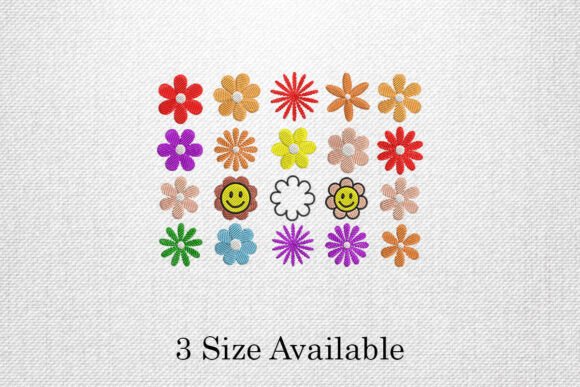
Smiley Flowers: A Craft Fair-Ready Embroidery Design
First Impression: Playful, Vibrant, and Instantly Approachable
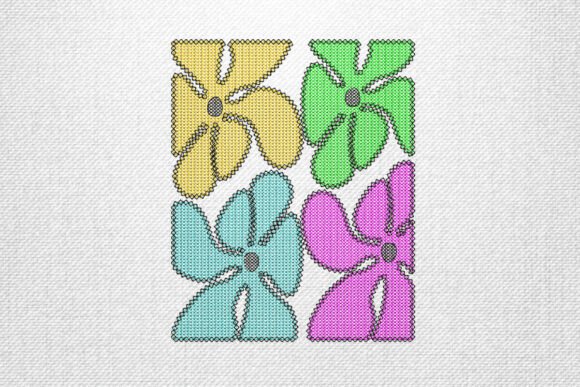
As an embroidery designer who’s prepped over 200 craft fair booths—from snowy holiday markets to sun-drenched summer fairs—I know how fast a customer’s eye moves across a table. Smiley Flowers lands with cheerful clarity: it’s not rustic, not minimalist, not overly elegant—but undeniably *friendly*. The name alone cues warmth and whimsy, and the description (“vibrant and imaginative flair”) confirms it’s built for emotional connection. This isn’t a quiet background motif—it’s a smile you can stitch. For handmade product makers, that’s gold: it reads as handmade *without* looking amateurish, and it fits seamlessly into the Bouquets Bunches category while standing apart from traditional floral stiffness.
Where Smiley Flowers Shines in Real Booth Displays
In my booth setup—featuring embroidered tote bags, linen aprons, flour-sack tea towels, denim caps, fabric pouches, and pillow covers—Smiley Flowers performs strongest when scaled intentionally. On a 12”x14” cotton tote bag, centered just below the handle seam, it becomes a focal point that invites touch and conversation. As apron embroidery, placed high on the bib (not too low near pockets), it adds personality without competing with functional details. For tea towel embroidery, it works beautifully in the lower corner—large enough to read from three feet away, small enough to leave room for monogramming or gifting tags.
It also excels as an embroidered patch: clean edges, balanced negative space, and expressive shapes translate well to iron-on or sew-on formats. On curved surfaces like caps, I recommend using a medium-density stabilizer and testing hoop placement—the smile’s curve naturally follows the crown’s contour if digitized thoughtfully. As a tote bag design or market bag accent, it signals joy and approachability—traits that convert browsers into buyers faster than intricate botanicals at a busy fair.
Photography, Listings, and Digital Appeal
This is where Smiley Flowers quietly outperforms many “cute” designs: it photographs exceptionally well. The contrast between bold petals and expressive faces holds up in natural light, and its shape avoids the flattening effect that plagues dense circular motifs. For Etsy sellers and digital embroidery file shops, that means stronger printable mockups and more consistent thumbnail recognition. It doesn’t rely on hyper-realistic shading or fine gradients—so it scales cleanly from a 3” patch listing to a 7” pillow cover preview. That versatility makes it a smart addition to your design assets library: one machine embroidery design serving multiple product lines and price points.
Production Practicality: Batch-Friendly, But Not Foolproof
Yes, Smiley Flowers is highly repeatable for batch production—but only if you respect its construction. As a working designer, I always check stitch density first: any tight clusters of satin stitches around the smile’s curve or petal tips can pucker thin fabrics or snag on textured towels. On terry cloth or looped kitchen towels, I reduce density slightly and add a tear-away + cut-away hybrid stabilizer. For dark fabric, test thread colors early—bright yellows or lime greens pop best against navy or charcoal, but pale pinks may vanish.
Also note: avoid shrinking this design below 2.5” wide. Tiny eyes or narrow stems lose definition, especially on curved cap fronts or small pouches. And never skip the scrap-fabric test—even with a trusted embroidery file. Fabric texture changes everything: what flows on quilting cotton may clump on canvas or shift on slubbed linen.
Critical Designer Notes Before You Cut Thread
- Always test on scrap fabric matching your final product’s weight and weave.
- Verify thread contrast—especially for Etsy seller listings where color accuracy builds trust.
- Review spacing between elements: petals shouldn’t crowd the smile, and stems need breathing room on tapered items like apron straps.
- Confirm hoop size compatibility—some versions of Smiley Flowers may require a 5”x7” hoop minimum; don’t assume 4”x4” will suffice.
- Inspect stitch density manually—not just in software. Dense fill areas heat up fast and can melt synthetic stabilizers.
- Use the right stabilizer: lightweight cut-away for stable wovens, medium-weight for knits, and tear-away + topping for textured towels.
- Create at least one real mockup before fair prep—photograph it in daylight, not under booth lights.
- Compare fabric colors side-by-side: cream vs. oatmeal vs. ivory all change how yellow threads read.
- Confirm commercial licensing status before selling finished products—this is non-negotiable for commercial embroidery use.
Why Smiley Flowers Strengthens Your Handmade Brand
At a craft fair, customers don’t just buy embroidery—they buy mood, memory, and meaning. Smiley Flowers delivers instant uplift without irony or trend fatigue. It supports brand consistency for boutiques leaning into joyful minimalism or cottage-core charm. It elevates a simple tea towel into a small shop product with giftable appeal—and makes your booth feel warm, curated, and human. Unlike ultra-trendy motifs that date quickly, this design feels timeless in its sincerity. It also encourages engagement: kids point, adults smile, and shoppers ask, “Is that hand-stitched?”—giving you the perfect opening to talk about your process, materials, and story.
The Bottom Line for Creative Entrepreneurs
Smiley Flowers isn’t just another Embroidery file—it’s a considered, market-tested asset for makers who value both aesthetic impact and production realism. It balances playfulness with polish, scale flexibility with structural integrity, and handmade charm with professional execution. Whether you’re an Etsy seller building a cohesive collection, a boutique maker refreshing seasonal inventory, or a Cricut and embroidery crafter expanding into physical products, this design earns its place in your lineup. Just remember: great embroidery starts before the machine runs. Test, adjust, photograph, and license—then let Smiley Flowers do what it does best: make people pause, smile, and reach for their wallet.