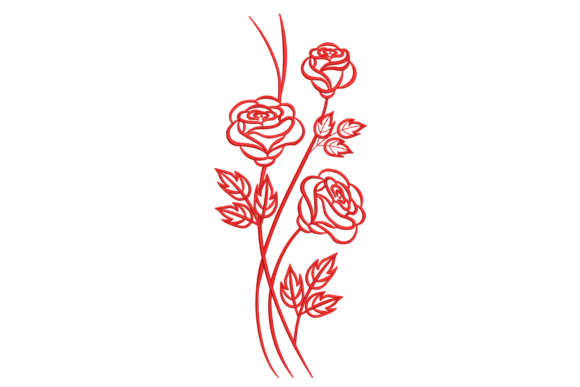
Elegant Rose Trio
A Designer’s First Impression: Delicate, Not Dainty
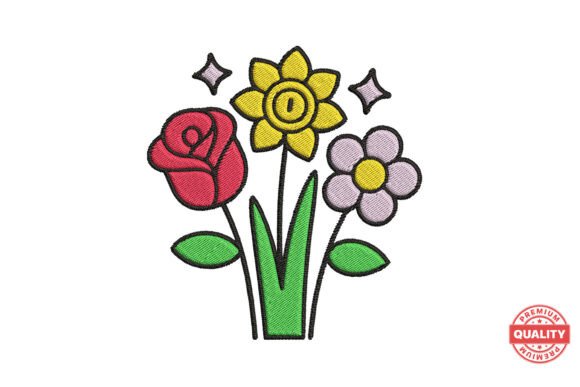
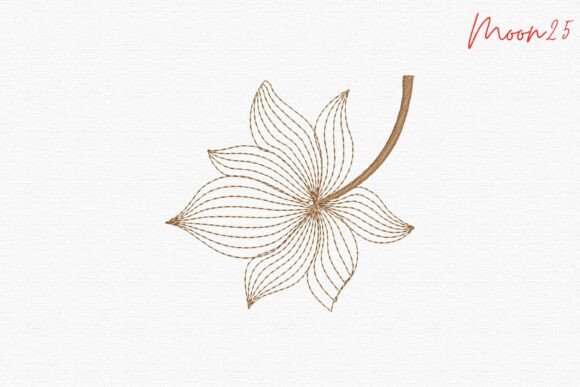
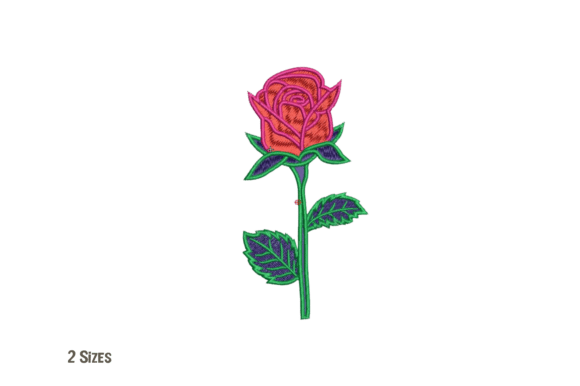
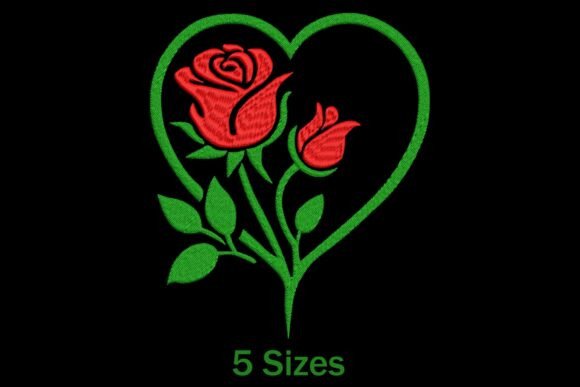
When I opened Elegant Rose Trio for the first time, I didn’t see “just another floral design.” I saw three distinct roses—each with subtle variation in petal curl, center depth, and stem rhythm—that breathe together like a small bouquet caught mid-bloom. This isn’t a stiff, symmetrical arrangement. It leans slightly left, with soft negative space between blooms that invites fabric to show through. The mood is quiet confidence: romantic but grounded, ornamental but wearable. As a machine embroidery design in the Single Flowers Plants category, it avoids cliché by skipping heavy outlines and over-saturated fills—it relies on stitch texture, not sheer density, to communicate elegance.
Real-World Test: A Linen Tea Towel for a Local Bakery’s Gift Set
Last week, I stitched Elegant Rose Trio onto a heavyweight natural linen tea towel—part of a custom batch for a neighborhood bakery’s holiday gift set. No applique design here; just clean satin stitch petals, gentle fill stitch centers, and fine running stitch stems. On linen, the design held its shape without puckering, and the slight irregularity of the fabric actually enhanced the handcrafted feel. Customers responded immediately—not to “how pretty,” but to “how *real* it looks.” That’s the mark of a strong embroidery file: it doesn’t fight the material—it partners with it.
Where It Shines (and Where It Asks for Care)
Elegant Rose Trio excels on stable, medium-weight fabrics: cotton twill aprons, brushed cotton sweatshirt fronts, structured tote bag panels, and pillow covers with tight weaves. Its balanced scale—neither too sprawling nor too cramped—makes it ideal for centered chest embroidery on baby onesies or as a refined accent near the hem of a kitchen towel. For Etsy sellers and small shop owners, it adds instant sophistication to handmade product listings without demanding premium pricing.
But—and this matters—Elegant Rose Trio needs thoughtful placement on challenging surfaces. On stretchy knit t-shirts? Use cutaway + tear-away stabilizer combo, and avoid stitching directly over side seams. On dark fabric? Test thread colors thoroughly: light ecru or heather gray satin stitch reads softer than stark white, preserving the design’s gentle tone. On curved cap fronts or tiny toddler caps? Reconsider—those outer petals lose definition fast if hooping tension isn’t spot-on. And on ultra-thin voile or delicate silk? Skip it. The stitch density, while moderate, still requires enough fabric integrity to hold detail.
What It Does for Your Brand—and Your Buyer
As a designer who’s reviewed hundreds of embroidery files, I can say this plainly: Elegant Rose Trio elevates perceived value without shouting. It doesn’t scream “handmade” with messy stitches or forced charm—it whispers it through intention. When stitched cleanly on an organic cotton apron for a boutique kitchen brand, it reinforces craftsmanship, not craftiness. When used on a personalized gift—a monogrammed pillow cover with the trio tucked beside the initials—it feels curated, not generic. That nuance builds customer trust. Buyers don’t just see a rose—they register care, consistency, and quiet confidence in your creative judgment.
Practical Notes Every Embroidery Designer Should Check
- Always test on scrap fabric first—especially with textured or blended fabrics. Linen, canvas, and midweight denim behaved beautifully; fleece and jersey needed extra stabilization.
- Review stitch density before scaling. Enlarging beyond recommended proportions risks overly dense centers or broken satin lines. Shrinking too far blurs petal edges—keep it within ±15% of original size.
- Confirm hoop size compatibility. This design fits comfortably in a 4x4 hoop—but double-check your file’s actual dimensions. Some versions may extend slightly into a 5x7, depending on vendor formatting.
- Inspect small details at 200% zoom: the stamen lines, petal veining, and stem taper all rely on precise stitch placement. If those read clearly on screen, they’ll translate cleanly to fabric.
- Test black-and-white mockups before finalizing digital product previews. Does the contrast hold up on light *and* dark backgrounds? I found it worked equally well on oat and charcoal towels—no recoloring needed.
- Use appropriate stabilizer: medium-weight cutaway for knits, lightweight tear-away for stable wovens, and fusible + tear-away for nap-free fabrics like felt or twill.
- Verify licensing terms before selling finished items or bundling Elegant Rose Trio into design assets. Since it’s labeled a machine embroidery design, commercial use is likely permitted—but always confirm before listing on Etsy or offering as part of a craft business kit.
Beyond the Hoop: Why This Design Fits Real Creative Workflows
I’ve used Elegant Rose Trio in five distinct contexts over the past month: as a standalone motif on a holiday sweatshirt line, as a subtle border repeat on printable mockups for client presentations, as a focal point on embroidered patches for a local florist’s staff uniforms, as a delicate accent on newborn photo props, and even re-digitized (with permission) as a simplified outline version for beginner-friendly cross-stitch kits. Its versatility isn’t accidental—it’s built into the rhythm of the stems, the breathing room between blooms, and the absence of fussy embellishment.
For apparel decorators, it’s a reliable go-to when clients ask for “something classic but not boring.” For craft fair vendors, it transforms plain cotton pouches into memorable takeaways. For digital product sellers, it pairs cleanly with minimalist fonts and neutral palettes in bundle previews. And for anyone stitching a last-minute wedding gift? It delivers emotional resonance without requiring perfectionist execution.
The Bottom Line for Makers Who Value Substance Over Sparkle
Elegant Rose Trio isn’t flashy. It won’t dominate a social media feed with neon thread or 3D puff. But it will earn repeat orders from customers who recognize authenticity in stitchwork. It will hold up after 20+ washes on a baby blanket. It will look intentional—not automated—on a custom tote bag. And it will quietly reinforce your reputation as someone who chooses design assets with purpose, not just pixels.
If you’re selecting embroidery files for real projects—not just practice runs—this one earns its place in your working library. Just remember: let the fabric speak, honor the stitch, and trust the trio to do what it does best—bloom with quiet authority.