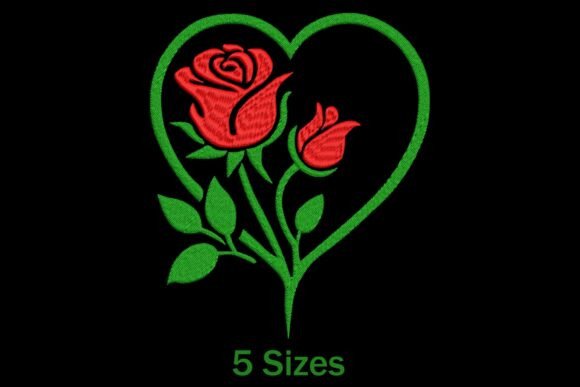
Rose Heart: A Smart Embroidery Choice for Small Business Branding
First Impression: Playful Elegance That Builds Trust
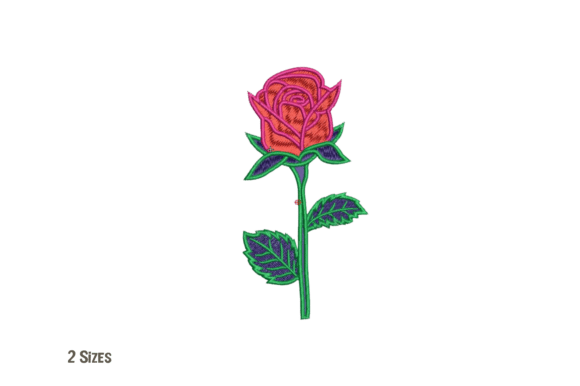
As an embroidery designer who’s developed hundreds of designs for cafés, boutiques, florists, and handmade brands, my first thought on seeing Rose Heart is: *this strikes the right balance*. It’s not overly fussy like a baroque botanical, nor is it so minimal it disappears on fabric. The title alone—Rose Heart—suggests warmth, care, and subtle romance, while “playful embroidery design” and “lively, quirky touch” in the description tell me it’s built for approachability. For small business merch, that duality matters: customers need to feel your brand is both genuine and polished. Whether you’re a pet boutique stitching this onto bandanas or a ceramic studio using it on packaging tags, Rose Heart reads as handmade—but intentionally so.
Real-World Performance Across Merchandise Types
Rose Heart shines where many floral embroidery files falter: versatility without visual noise. As an embroidered patch, its clean silhouette holds up at 2.5"–3.5", especially when stitched with satin-stitch petals and a smooth outline—ideal for attaching to tote bags, aprons, or denim jackets. On staff uniforms—think café aprons or bakery shirts—it works beautifully as a chest accent or sleeve detail: compact enough to avoid overwhelming the garment, yet distinctive enough to reinforce brand identity at a glance.
For cap embroidery, position Rose Heart slightly off-center on the front panel (not too high, not too low), and it adds charm without competing with logos. On dark uniforms—navy, charcoal, or deep olive—it gains presence with high-contrast thread colors (ivory petals, burgundy stem, soft gold stamen). And because it’s categorized under Single Flowers Plants, it avoids the clutter of multi-flower arrangements, making it easier to scale down for product labels or sew-on tags on handmade soap or candle packaging.
Tote bag design? Yes—especially when paired with simple typography (“Est. 2022” or your shop name) beneath it. As a standalone mark on reusable bags, it signals care and craft, reinforcing your values without saying a word. Etsy sellers report stronger engagement when using Rose Heart on listing mockups: its “lively, quirky touch” translates well in printable mockups and digital previews, helping buyers imagine it on real items before purchase.
Where to Use Rose Heart Thoughtfully
Like any strong machine embroidery design, Rose Heart demands context-aware execution. Avoid shrinking it below 1.75" for patches—fine details (like delicate stem curves or heart-shaped center) may blur or stitch poorly, especially on textured fabric like terry cloth towels or heavy canvas. Cap fronts with steep curvature require careful digitizing adjustments; if your digitizer hasn’t optimized for stretch or dome, test on a cap blank first.
High stitch density isn’t mentioned in the description, but floral motifs can pack dense fills. If your version includes tight satin stitches on petals, confirm stabilizer choice: medium-weight cutaway for stable fabrics (cotton twill, poplin), tear-away for lighter knits. Also, avoid placing Rose Heart directly over seams or pockets unless hooping and alignment are precisely controlled—misalignment ruins the “elegant” impression instantly.
Dark uniforms and frequent washing demand thread color planning. Test black thread on light fabric? Sure. But for longevity and clarity, recommend premium polyester threads—especially for apron embroidery or staff caps that go through commercial laundries weekly. And never skip testing on *your actual fabric*: a design that looks perfect on linen may sink into fleece or ripple on performance knit.
How Rose Heart Strengthens Your Brand Identity
In small business branding, consistency isn’t just about color palettes—it’s about emotional resonance. Rose Heart supports that by being flexible yet unmistakable. It doesn’t scream “luxury” like a monogram, nor does it lean into trend-driven quirk. Instead, it quietly says, *we pay attention to detail, we value beauty in everyday things*. That builds customer trust—especially for handmade product lines where perceived craftsmanship directly affects perceived value.
Used across multiple touchpoints—apron embroidery, cap embroidery, tote bag design, and even as a subtle tag on gift boxes—it creates visual rhythm. Customers begin recognizing your brand not by a slogan, but by that familiar, friendly bloom. That recognition compounds: repeat buyers notice it, social media reposts highlight it, and local collaborators (like farmers’ market neighbors) remember it. In short, Rose Heart functions as a quiet anchor in your design assets—not flashy, but foundational.
Practical Designer Notes Before You Stitch
- Test in black and white first: Print the outline to assess proportion and flow before committing thread.
- Check small-patch viability: Resize to 2" and zoom in—do stems stay crisp? Does the heart center retain shape?
- Review thread color contrast: On dark fabric, use light stem + darker petal or vice versa—avoid mid-tone combos that mute impact.
- Inspect spacing: Ensure no elements crowd the edge—critical for clean patch borders and cap embroidery clearance.
- Confirm hoop size compatibility: Most embroidery file versions of Rose Heart fit standard 4x4 hoops, but verify before production runs.
- Use proper stabilizer: Match to fabric weight and end-use—cutaway for durability, tear-away for breathability.
- Create a client mockup: Show how Rose Heart looks on their actual apron or tote bag—not just generic stock images.
- Compare beside other design assets: Does it harmonize with your logo, typography, and packaging? Does it stand alone if needed?
- Confirm commercial licensing: Since this is intended for small business merch, custom apparel, and commercial embroidery, ensure your license covers resale and branded use.
Bottom line: Rose Heart isn’t just another floral motif—it’s a strategic, scalable element for businesses building authentic, memorable identities. When stitched with intention, it transforms everyday items into quiet ambassadors of your brand’s care, creativity, and character.