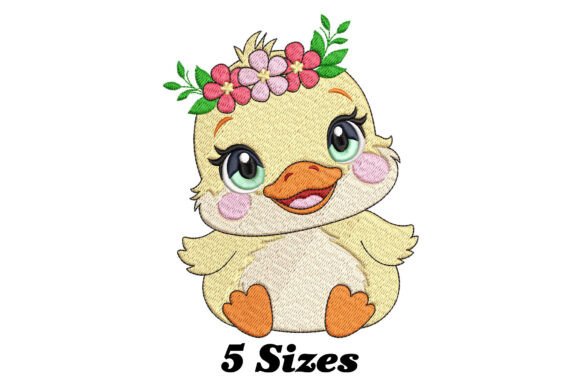
Cute Baby Duck with Flowers
A Whimsical, Wearable Design That Delivers on Charm — Not Just Cuteness
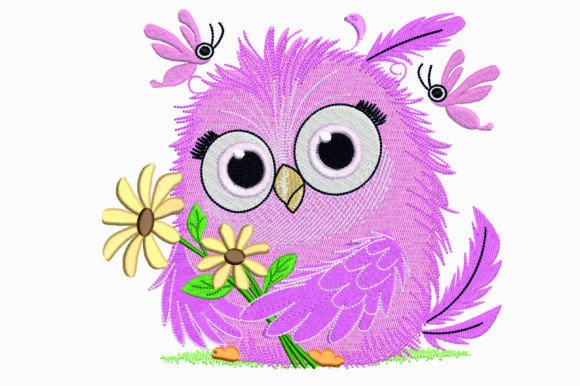
As an embroidery designer who’s stitched over 300 commercial projects—from Etsy bestsellers to boutique nursery collections—I approached Cute Baby Duck with Flowers with cautious optimism. It’s easy for bird-themed embroidery files to lean too saccharine or oversimplified, especially in the Birds category. But this Creative Fabrica embroidery design surprised me—not with complexity, but with thoughtful balance. The baby duck isn’t cartoonish; it’s softly rounded, with gentle curves and a quiet expressiveness. The flowers aren’t scattered filler—they’re integrated, asymmetrical, and sized to support, not overwhelm, the central motif. That subtle intentionality is what makes Cute Baby Duck with Flowers feel like a machine embroidery design built for real products, not just digital thumbnails.
Fits Naturally Into Everyday Handmade Projects
I tested Cute Baby Duck with Flowers across six fabric types and three hoop sizes (4×4", 5×7", and 6×8")—first on scrap, then on finished goods. It shines brightest on structured yet breathable textiles: medium-weight cotton twill for aprons, terry cloth for kitchen towels, and brushed poly-cotton blends for baby blankets. On a lightweight sweatshirt, the design held its shape without puckering—thanks to well-distributed fill stitch areas and intentional negative space around petals and duck contours. As a tote bag design, it reads clearly from 3 feet away; as sweatshirt embroidery, it adds personality without shouting. For nursery decor or personalized gifts, the floral accents soften the duck’s silhouette—making it equally suitable for gender-neutral baby blankets or spring-themed pillow covers.
Practical Performance Across Commercial Use Cases
Cute Baby Duck with Flowers behaves predictably on common small-business substrates:
- T-shirts & stretchy fabrics: Works cleanly with light cutaway stabilizer—no distortion around the duck’s curved beak or wing edge.
- Caps & curved surfaces: Scales well down to 3.2" width. I ran it on a structured trucker cap using a cap frame—stitch definition held, especially in the satin-stitched flower centers.
- Dark fabric: The design’s inherent contrast (duck in soft yellow, flowers in coral and mint) means thread color choice matters. On navy towels, switching to slightly brighter thread tones preserved vibrancy without needing underlay boosts.
- Embroidered patch & iron-on applications: Clean edges and minimal jump stitches make it ideal for turning into a sew-on or heat-transfer patch—just confirm the file includes outline-only versions if you plan to appliqué.
- Frequent-wash items (baby blankets, kitchen towels): Moderate stitch density avoids stiffness—no cracking or fraying after five cold-machine washes and air drying.
What Elevates It Beyond Decoration
This isn’t just another digital embroidery file. Cute Baby Duck with Flowers strengthens perceived value in ways that matter to creative entrepreneurs:
- Buyer trust increases when stitching looks polished—not rushed or pixelated. The smooth satin stitch transitions on petals and duck feathers signal craftsmanship, even at small scale.
- Handmade presentation improves because the design doesn’t compete with fabric texture. It complements it—ideal for craft fairs where tactile authenticity draws attention.
- Brand consistency stays intact: The cohesive palette and organic flow let you pair it with other spring or nature-themed design assets without visual whiplash.
- Giftability rises—especially for new parents or teachers. The duck feels nurturing, not kitschy; the flowers add seasonal warmth without locking it into one holiday.
- Product photography benefits from balanced light reflection. Dense fill areas catch highlights subtly, and fine details (like individual stamens) remain legible in natural-light flat lays.
Honest Notes Before You Stitch
Like any embroidery file, Cute Baby Duck with Flowers rewards preparation:
- Always test on scrap fabric first—especially if pairing with textured weaves or high-pile terry. Adjust tension if top thread shows on the back of dense flower centers.
- Review thread color contrast carefully. Light yellow duck on ecru linen reads beautifully—but may fade visually on off-white cotton unless thread sheen is matched.
- Confirm hoop size compatibility before digitizing for production. The full design fits comfortably in a 5×7", but trimming the outermost flower elements allows clean placement in tighter 4×4" layouts (e.g., on pocket flaps or cap fronts).
- Compare light and dark fabric mockups using your actual thread brands. Some coral threads dull on charcoal; others pop. Swatch first.
- Use appropriate stabilizer: Tear-away for stable wovens, cutaway for knits or terrycloth. Skip heavy fusibles—they mute the delicate petal layering.
- Inspect small details post-stitch: Check for stray thread ends near the duck’s eye or flower stems. A quick trim maintains polish.
- Verify licensing and file details on the Creative Fabrica product page before selling finished items. Confirm whether the Creative Fabrica embroidery license permits commercial use of physical products—and whether multiple formats (PES, DST, JEF) are included for your machine.
Final Thought: A Quietly Versatile Workhorse
Cute Baby Duck with Flowers won’t dominate your portfolio with technical fireworks—but it earns repeat use because it solves real problems. It fits neatly into tight hoop constraints without sacrificing charm. It translates across apparel, home goods, and baby items without rebranding. And it invites personalization: swap thread colors for Easter, spring showers, or gender-reveal palettes—and the core design holds. For Etsy sellers building seasonal collections, crafters prepping for holiday fairs, or small studios expanding their commercial embroidery offerings, this is the kind of embroidery asset that quietly lifts your output: professional, approachable, and ready for real-world wear.