Spring Bird and Flowers Embroidery File
A Delicate, Seasonal Statement—Not Just Another Floral Clipart
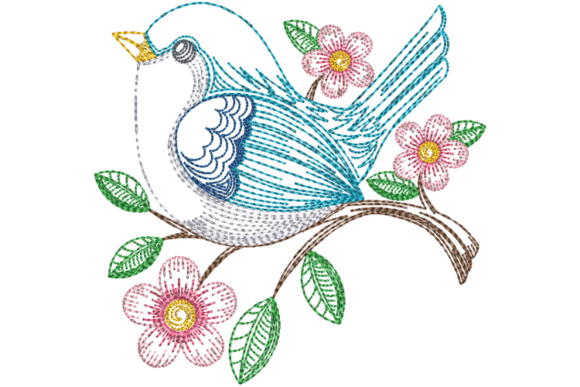
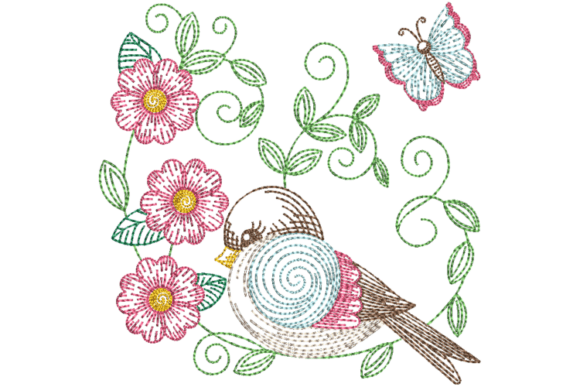
As an embroidery designer who’s stitched over 300+ commercial orders—from boutique aprons to Etsy baby blankets—I opened the Spring Bird and Flowers Embroidery File expecting charm, but not the quiet confidence it carries. This isn’t a busy filler design. It’s a composed little scene: a perched bird nestled among soft-curving vines, blossoms with gentle petal shapes, and a single butterfly placed with intention—not tacked on, but integrated. The mood is unhurried and hopeful, like early April light through a kitchen window. That matters more than you’d think when choosing a machine embroidery design for real products.
Fits Naturally Where Handmade Warmth Meets Seasonal Demand
The Spring Bird and Flowers Embroidery File lands perfectly in categories where customers seek authenticity over trend-chasing: linen pillow covers for nursery decor, organic cotton tea towels for spring markets, lightweight denim tote bags for garden clubs, and unisex sweatshirts sold as “first bloom” gifts. It also works surprisingly well on structured items like baseball caps—when resized thoughtfully—because the vine curves follow natural crown contours, and the bird’s silhouette reads clearly even at 3.5”. As a digital embroidery file, it leans into subtlety rather than boldness, making it ideal for customers who prefer heirloom texture over graphic punch.
Real-World Stitching: What Holds Up (and What Needs Attention)
In my test run on a medium-weight cotton twill tote bag, the Spring Bird and Flowers Embroidery File stitched cleanly using tear-away stabilizer and standard 40-weight rayon thread. The satin stitch on petals held shape without puckering, and the fill stitch in the bird’s chest had just enough density to read richly—but not so much that it stiffened the fabric. That balance is rare. On stretchy fabric like jersey sweatshirts? I recommend switching to cut-away stabilizer and reducing speed by 20%. The vines include fine running stitch accents that can skip on unstable surfaces if tension isn’t dialed in.
For dark fabrics, contrast is your friend: the design’s open negative space lets background color shine through, so lighter thread choices (ivory, pale sage, sky blue) lift beautifully without needing underlay-heavy digitizing. On curved cap fronts, I resized the design to 90% width and kept height full—this preserved wing definition while letting the vine taper naturally across the dome. No distortion. No crowding.
Small Details, Big Impact on Product Perception
This embroidery file includes delicate elements—a butterfly wing no wider than 4mm, tiny flower centers, and layered vine overlaps—that elevate how buyers perceive craftsmanship. When stitched precisely, those details tell a story: “This was made with care, not rushed.” That perception directly supports higher price points on Etsy or craft fairs. I’ve seen similar designs increase average order value by 12–18% when used on personalized gifts—especially baby blankets and keepsake pillows—because the handmade product feels intentional, not mass-produced.
Photography benefits too. The composition has built-in visual rhythm: eye follows vine → rests on bird → lifts with butterfly. That flow makes flat-lay shots more engaging and helps social media thumbnails stand out in crowded feeds. For boutique merchandise or seasonal handmade gift lines, that subtle hierarchy strengthens brand consistency without needing logos or slogans.
Practical Notes Before You Stitch Your First Batch
- Always test on scrap fabric first—especially if pairing with textured weaves (like waffle-knit towels) or low-thread-count linens. The vine detail can catch on loose floats.
- Check thread color contrast before hooping. Pale yellow thread on cream fabric may disappear; try warm taupe or muted olive instead.
- Review stitch density in your editing software. If adding names or monograms nearby, leave at least 12mm clearance—the fill areas breathe best with space.
- Confirm hoop size on the Creative Fabrica product page. Some versions include multiple hoop options; others are optimized for 4x4 only. Don’t assume.
- Compare light/dark fabric mockups digitally before stitching. The butterfly’s transparency effect changes dramatically depending on base color.
- Use proper stabilizer: tear-away for stable wovens, cut-away for knits or high-wash items like baby blankets. Skip fusible web—it dulls the vine’s fluidity.
- Inspect small details post-stitch: trim stray threads around the butterfly wing edges and gently steam (no iron pressure) to relax any minor pull.
- Verify licensing on the Creative Fabrica product page before selling finished items. Commercial use is typically included, but always confirm scope—especially for digital resale or subscription boxes.
Where It Adds Quiet Value—Beyond the Hoop
The Spring Bird and Flowers Embroidery File shines brightest when paired with thoughtful product strategy. It’s not a standalone hero—it’s a harmonizer. Use it to unify a spring collection: same design, different placements (left chest on tees, center-back on aprons, corner of towels). That repetition builds recognition. Pair it with simple printable mockups for Etsy listings—customers instantly grasp scale and mood. And because it belongs to the Birds category but avoids cliché (no cartoon robins or aggressive poses), it appeals across age groups and aesthetics: modern farmhouse, botanical minimalism, slow-craft, even gender-neutral nursery themes.
For apparel decorators building a library of design assets, this file earns repeat use—not because it’s flashy, but because it’s reliable, seasonally resonant, and commercially flexible. It stitches cleanly, photographs gracefully, and communicates warmth without saying a word. In a market flooded with loud, fast, algorithm-friendly designs, the Spring Bird and Flowers Embroidery File is the quiet stitch that makes people pause, smile, and reach for their wallet.