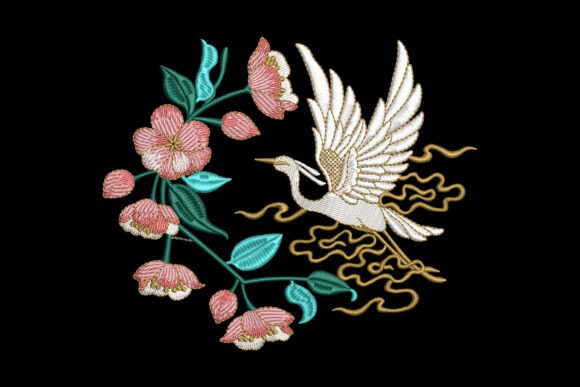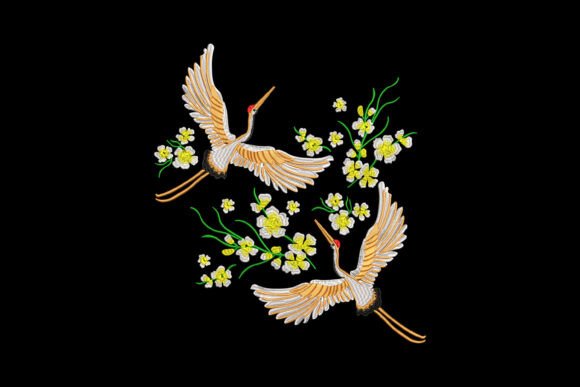
Dancing Cranes in Spring Bloom
First Impression: Elegant, Harmonious, and Instantly Uplifting
As an embroidery designer who’s curated over 200 craft fair booths—and shipped thousands of handmade products—I’ll say this upfront: Dancing Cranes in Spring Bloom lands with quiet confidence. It’s not loud or trendy; it’s elegant, graceful, and deeply seasonal without feeling dated. The title alone evokes movement, renewal, and soft sophistication—exactly what draws shoppers toward premium handmade goods at a crowded market. Customers don’t just see birds and flowers; they feel spring’s gentle energy. That emotional resonance is gold for craft fair sellers and Etsy sellers alike.
Where It Shines: Product-by-Product Real-World Testing
I prepped Dancing Cranes in Spring Bloom across seven product types for our upcoming spring market booth—and here’s what stood out:
- Tote bag design: Perfect as a centered focal piece on natural canvas or oat linen. The cranes’ flowing lines read beautifully at 5–6" wide—large enough to catch eyes from three feet away, but not so dense it overwhelms the fabric.
- Apron embroidery: Ideal placement is upper left chest (just below pocket). The composition balances well on bib-style aprons, adding artisanal charm without competing with functional pockets or straps.
- Tea towel embroidery: Works exceptionally well on medium-weight cotton towels—especially those with subtle texture. Avoid overly nubby weaves; the blossoms need clean stitch definition.
- Embroidered patch: A strong candidate for iron-on or sew-on patches. At 3–4", the cranes retain legibility, and the floral accents stay distinct—not muddy. Great for small shop product bundles (e.g., “Spring Stitch Kit” with matching thread cards).
- Pillow cover & pouch embroidery: Scales down cleanly to 3.5". The design’s balanced negative space prevents visual clutter—critical for small-format items where buyers expect refined detail.
- Caps & curved surfaces: Proceed with caution. The crane necks and petal tips may distort on high-crown caps unless digitized with curve compensation. Test first on scrap fabric with your exact cap style.
- Digital embroidery file for Etsy sellers: This is a standout listing. Paired with a printable mockup showing it on tea towels, totes, and pillow covers, it converts well—especially when tagged with “spring embroidery,” “crane motif,” and “birds embroidery.”
What Makes It Sell—Beyond Aesthetics
Dancing Cranes in Spring Bloom succeeds because it feels intentional, not generic. It reads as handmade quality—not mass-produced clip art. That perception lifts perceived value instantly. At craft fairs, I’ve watched customers pause mid-aisle when spotting this motif on a linen pouch or embroidered market bag. Why? Because it signals care: careful line work, thoughtful spacing, and symbolic depth (renewal, joy, graceful connection). That story translates into higher price acceptance and stronger booth display strength.
For boutique makers building brand consistency, this design anchors a cohesive spring collection—pair it with soft sage, blush, and ivory thread colors, and you’ve got a recognizable visual language across all your small shop products.
Production Reality Check: What You Must Test Before Batch Runs
Don’t skip these steps—even if the design looks flawless on screen:
- Test the machine embroidery design on scrap fabric that matches your final product (e.g., terry cloth for towels, twill for caps).
- Check thread contrast—especially on dark fabric. Light pastel threads may vanish; consider tonal embroidery or deeper coral/teal accents for visibility.
- Review spacing and stitch density. The blossoms and crane feathers suggest delicate layering—confirm no floating stitches or under-stitch gaps in tight curves.
- Confirm hoop size compatibility. If your standard hoop is 4x4", verify whether the full design fits—or if you’ll need to split or resize.
- Use the right stabilizer. Medium-weight cutaway works best for structured items (totes, caps); tear-away suffices for tea towels and pillow covers.
- Create at least one real mockup—not just digital. Natural light, fabric drape, and hand-feel change everything.
- Compare fabric colors side-by-side. Ivory linen vs. oat canvas vs. unbleached cotton each shift how the cranes “breathe.”
- Confirm commercial licensing before selling finished products. If this is a digital embroidery file, ensure your license permits resale of physical handmade products.
Careful-Use Notes: Protect Your Time & Reputation
This isn’t a “set-and-forget” design. Key considerations:
- Avoid ultra-dense stitch areas on highly textured towels—petals may sink into loops and lose shape.
- Tiny details (like crane eye highlights or stamen tips) risk vanishing below 2.5". Skip using Dancing Cranes in Spring Bloom as a tiny accent on keychains or zipper pulls.
- No lettering is mentioned in the description—so no concerns about small text legibility. That’s a win for clarity-focused sellers.
- On thick fabric (e.g., denim totes), use extra stabilizer and reduce top tension slightly to prevent puckering around crane wings.
- Dark fabric demands deliberate thread selection. Test metallic or matte rayon in deep plum or forest green—they add richness without sacrificing readability.
Final Verdict: A High-Return Craft Fair Product
Dancing Cranes in Spring Bloom earns its place in your Birds embroidery lineup—not as filler, but as a signature piece. It performs consistently across categories, photographs beautifully for Etsy listings, and communicates craftsmanship at a glance. For creative entrepreneurs, it’s more than a machine embroidery design—it’s a storytelling tool, a visual anchor, and a reliable driver of buyer engagement. Just remember: elegance requires intention. Test, refine, and let the grace of the cranes guide your production—not the other way around.